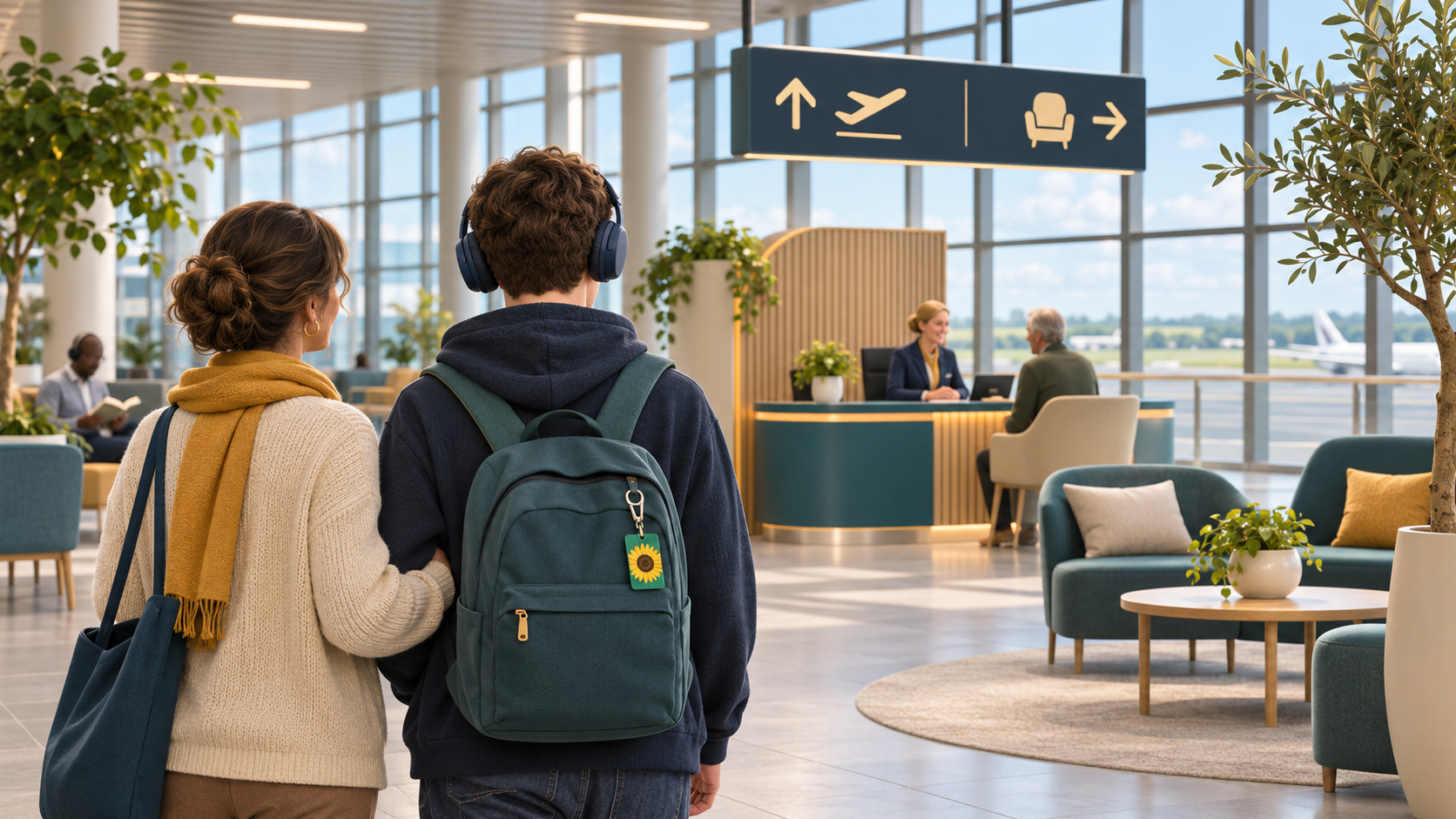
Airport Special Assistance for Autistic Travellers in the UK.
Flying from a UK airport can be exciting, but for autistic travellers and people with additional needs, it can also bring challenges that aren't always obvious to other people.
Busy check-in areas, unfamiliar security procedures, loud announcements, queues and sudden changes can all affect how comfortable someone feels.
For some travellers, having clear instructions and knowing what to expect is enough. Others may need practical assistance, a quieter place to wait or additional support throughout their journey.
The important thing is understanding what help is available before you travel.
At Worldwide Breaks, I believe holiday planning should begin with the person travelling, not simply their diagnosis.
What Is Airport Special Assistance?
Airport special assistance is support provided for disabled passengers and people with reduced mobility, including those with non-visible disabilities such as autism.
Under UK aviation rules, eligible passengers are entitled to appropriate assistance free of charge.
Depending on individual requirements, assistance may include:
- Help navigating the airport.
- Support during check-in and security screening.
- Assistance reaching the departure gate.
- Help with boarding and leaving the aircraft.
- Guidance through unfamiliar airport procedures.
- Support during connections and at the arrival airport, where available.
The assistance provided should reflect the traveller's individual needs. Not everyone will require the same level of help.
How to Arrange Airport Special Assistance
The UK Civil Aviation Authority recommends requesting assistance when booking your flight or, where possible, at least 48 hours before departure.
You can normally make the request through your airline, travel agent or tour operator.
When requesting assistance, explain what the traveller actually needs rather than relying on a diagnosis alone.
For example:
"My child is autistic and can become overwhelmed by loud noises and crowded queues. They may need additional time, clear instructions and support during security screening."
Or:
"I'm autistic and can find unexpected changes difficult. It helps if staff explain what is happening before asking me to move somewhere else."
These details give the assistance team a better understanding of how they can help.
Ask for written confirmation of your arrangements and keep a copy with your travel documents.
You can still request help without 48 hours' notice, but the airport may not be able to provide every service you need without advance arrangements.
What Happens at Airport Security?
Security screening can be one of the more demanding parts of an airport journey.
There may be queues, unfamiliar equipment, instructions from several staff members and requests to separate personal belongings.
Some travellers may find it particularly difficult if they are unexpectedly asked to remove clothing items, move away from a family member or have their belongings checked.
Before travelling, consider whether the person would benefit from:
- A simple explanation of the screening process.
- Pictures or videos showing what security looks like.
- Additional time to understand instructions.
- Staff explaining each step before carrying it out.
- Assistance with communication.
- Support from a parent, carer or travelling companion.
You can explain relevant needs to security staff before screening begins.
Airport security requirements still apply to everyone. Special assistance does not automatically mean that security checks can be avoided.
However, explaining a traveller's needs in advance can help staff consider appropriate support while maintaining safety requirements.
Can Autistic Travellers Use the Hidden Disabilities Sunflower?
The Hidden Disabilities Sunflower is recognised at a number of UK airports.
The green lanyard with yellow sunflowers is a discreet way of indicating that someone has a non-visible disability and may need extra understanding, patience or support.
It may be helpful for travellers who:
- Need additional time to process information.
- Find communication difficult in unfamiliar situations.
- Experience sensory overload.
- Become anxious in busy environments.
- Need instructions explained differently.
Wearing a Sunflower lanyard is entirely optional.
It does not automatically provide fast-track security, priority boarding or access to a quiet room.
Those arrangements should be checked separately with the airport and airline.
At Worldwide Breaks, I'm proud to support the Hidden Disabilities Sunflower and the understanding it encourages.
Which UK Airports Offer Support for Autistic Travellers?
Airports across the UK provide assistance services, but their facilities and arrangements differ.
It is important to check the airport you are using rather than assuming every airport provides the same support.
London Heathrow Airport
Heathrow provides assistance services for passengers with visible and non-visible disabilities.
Its facilities include dedicated assistance areas and support for passengers using the Hidden Disabilities Sunflower.
Sunflower lanyards are available through assistance areas.
If you need somewhere quieter to wait, or help navigating a particular terminal, contact Heathrow before travelling to discuss what is available.
London Gatwick Airport
Gatwick provides assisted travel services for passengers with disabilities, including autism and other non-visible conditions.
Free Sunflower lanyards are available from assisted travel desks in the check-in areas.
Passengers can explain their requirements to the airport's assistance team and ask about available arrangements.
Other UK Airports
If you're travelling from Manchester, Birmingham, Liverpool, East Midlands, Bristol, Newcastle, Edinburgh, Glasgow or another UK airport, check its official accessibility information before departure.
Useful questions include:
- Where is the special assistance meeting point?
- Is there a quieter waiting area?
- Is the Hidden Disabilities Sunflower recognised?
- Can assistance be arranged through security?
- Are there particular arrangements for passengers with sensory needs?
- Where should we go if we need help on the day?
Facilities can change, so always check directly with the airport for the latest information.
Are Quiet Rooms Available at UK Airports?
Some airports provide quieter areas, sensory facilities or alternative waiting arrangements.
However, these facilities are not available at every airport or terminal.
Even where a quieter area exists, access may be restricted, require advance arrangements or depend on availability.
Before travelling, ask:
"Is there somewhere quieter we can wait after security, and how do we access it?"
If no dedicated quiet room is available, airport staff may be able to suggest a less busy area.
It is worth having an alternative plan, particularly during peak holiday periods.
Preparing an Autistic Child for the Airport
For some children, knowing what will happen next can make a significant difference.
You might find it helpful to explain the journey in a simple sequence:
- We will leave home and travel to the airport.
- We will check in and hand over our suitcase if needed.
- We will go through airport security.
- We will find somewhere to sit and wait.
- When our gate is announced, we will go there.
- We will board the aircraft and find our seats.
Photographs of the airport, a simple visual timetable or a short explanation of each stage may help.
Other children may prefer not to discuss the journey repeatedly.
There is no single approach that works for every autistic child.
Follow what helps your child feel comfortable and prepared.
What Should You Pack in Your Hand Luggage?
I always encourage families to think about what somebody may need during the journey, not just what they will need when they arrive.
Depending on individual needs, useful items might include:
- Noise-reducing headphones or ear defenders.
- A familiar comfort item.
- A tablet or other preferred activity.
- Chargers and a power bank that meets airline rules.
- Familiar snacks, subject to security and destination restrictions.
- A change of clothes.
- Essential medication.
- A visual schedule or communication aid.
- Something familiar to help with waiting.
Check the latest hand luggage and security requirements before travelling.
Rules for liquids can differ between UK airports. Some airports permit larger containers, while others retain stricter limits.
Medical and special dietary requirements may qualify for exemptions, but additional screening may still be necessary.
Always check the rules for your departure airport, connecting airports and return journey.
What If Your Flight Is Delayed?
Even with careful planning, flights can be delayed or airport arrangements can change.
For someone who relies on routine or predictability, an unexpected delay may be particularly difficult.
It can help to prepare a simple alternative plan before leaving home.
Consider what you might do if:
- Your departure gate changes.
- The flight is delayed.
- The departure lounge becomes crowded.
- Your child needs time away from the noise.
- A familiar activity or device stops working.
Keep essential comfort items and practical supplies accessible.
If you have arranged special assistance, speak to the assistance team if your circumstances change or you need additional support.
You cannot prevent every disruption, but having a few options can make unexpected changes easier to manage.
Frequently Asked Questions
Is airport special assistance free for autistic travellers?
Yes. Under UK aviation rules, eligible disabled passengers, including those with non-visible disabilities such as autism, are entitled to appropriate assistance free of charge.
The support provided depends on the individual's needs.
Do you need an official autism diagnosis to request assistance?
You should explain your individual needs when making the request. An autism diagnosis is not the only basis for assistance, and passengers with other qualifying disabilities may also be eligible.
If you are unsure what evidence or information is required for a particular arrangement, ask the airline or airport directly.
Does the Sunflower lanyard allow you to skip airport security?
No. The Sunflower indicates that someone may need additional understanding or support.
It does not automatically provide priority security access or exemption from screening procedures.
Can a parent or carer stay with an autistic child during assistance?
Assistance arrangements should take account of the child's needs and accompanying adults.
Ask the airline or airport how the family will be supported through check-in, security and boarding.
Security screening requirements will still apply.
Can autistic adults request airport assistance?
Absolutely. Airport assistance is not limited to children or wheelchair users.
Autistic adults may also need help with communication, navigating the airport, understanding procedures or managing particular aspects of their journey.
Can we request assistance after booking our flights?
Yes. Contact the airline, travel agent or tour operator as soon as possible.
Where possible, make the request at least 48 hours before departure so the relevant teams can prepare.
What if the airport does not have a sensory room?
Ask whether an alternative quieter waiting area or assistance arrangement is available.
A dedicated sensory room is not guaranteed, so having a backup plan can be useful.
My Approach at Worldwide Breaks
When someone asks me to help plan a holiday, I don't just think about the destination or hotel.
I also think about the journey.
An airport with unfamiliar procedures, a long transfer, a crowded departure area or a poorly timed flight can affect the holiday experience before it has even begun.
That doesn't mean autistic travellers and families with additional needs should avoid flying.
It means we should ask the right questions and plan around the individual.
I want to understand what makes travelling easier, what has caused difficulties before and what would help someone feel more comfortable.
Sometimes that means looking at different departure airports, flight times or assistance arrangements.
Sometimes it simply means making sure a family knows what to expect.
And if something doesn't look suitable, I'd rather say so before anyone books.
Useful Official Information
UK Civil Aviation Authority: How to Access Help and Support
https://www.caa.co.uk/air-passengers/assisted-travel/how-to-access-help-and-support/
UK Government: Hand Luggage Restrictions
https://www.gov.uk/hand-luggage-restrictions
Heathrow Airport: Non-Visible Disabilities
https://www.heathrow.com/at-the-airport/assistance-and-accessibility/non-visible-disabilities
London Gatwick Airport: Accessibility
https://www.gatwickairport.com/Accessibility
Need Help Planning an Autism or SEN Family Holiday?
If you're planning a holiday for yourself, your child or someone with additional needs, I'd be happy to help you explore your options.
Tell me about your preferred destination, departure airport, sensory needs, routines, accommodation preferences or anything else that might make the journey easier.
You don't need to have everything worked out before getting in touch.
Explore my SEN Holiday Finder:
https://www.worldwidebreaks.online/sen-holiday-finder/
Return to the Worldwide Breaks Main Menu:
https://www.worldwidebreaks.online/menu/
Worldwide Breaks
https://www.worldwidebreaks.online/
I start with the person, not the label.